Everything You Always Wanted to Know about Drone Racing (*But Were Afraid to Ask)
What’s Drone Racing? You’re a beginner looking to get started with FPV drone racing.
In this section, you’ll find a FPV Drone Racing beginner’s guide that will help you start this amazing hobby (or sport) the right way.
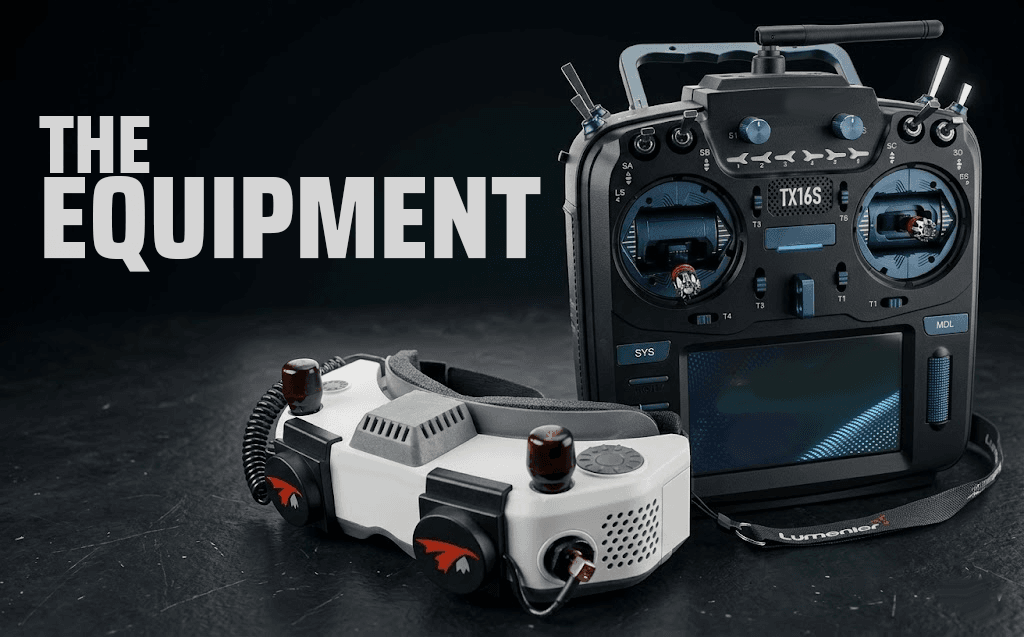
Before you ever touch a drone, you need the gear that connects you to it. In FPV, you aren’t looking up at the sky; you are entirely immersed in the cockpit.
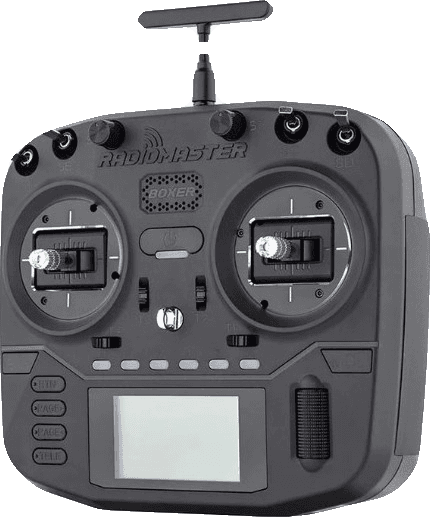
This is your steering wheel. Usually is the first equipment you have to buy, because you will start using it immediately with the Simulator.
Unlike standard gaming controllers, FPV radios use high-precision joysticks called gimbals to give you absolute, raw control over the drone’s movements.
No Auto-Leveling: In racing (Acro mode), if you push the stick forward and let go, the drone stays tilted forward. You are constantly making micro-adjustments.
The Link: Modern controllers use long-range, low-latency radio protocols (like ExpressLRS or TBS Crossfire) to ensure that the millisecond you move your finger, the drone reacts.
They generally operate on two main frequencies: 2.4 GHz and can push the latency down to a mind-blowing 2 to 4 ms. At 100 mph, that instantaneous connection is the difference between threading a needle and smashing into a gate.
Using the radio transmitter sticks, the pilot can control the drone’s rotation on all axes (pitch, roll, and yaw). They can also arm and disarm the motors
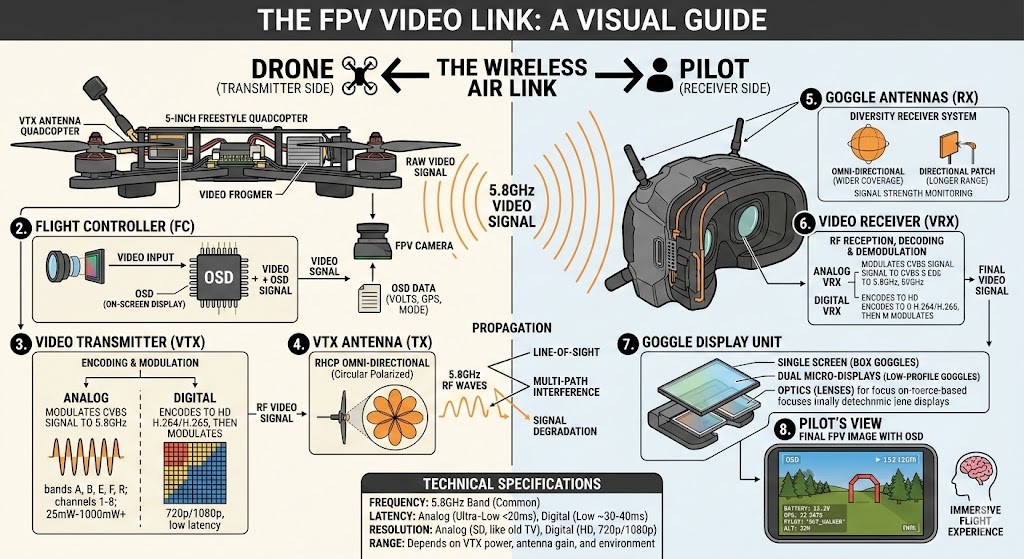
This is what makes FPV feel like a superpower. The goggles receive a live video feed directly from the camera on the front of the racing drone. But how does that video reach your eyes in real-time while you are flying at 100 mph?
The VTX (Video Transmitter) & The 5.8 GHz Frequency To send video through the air without interfering with your radio controller, the drone uses a dedicated component called a VTX. While your controller steering inputs travel on 2.4 GHz or 900 MHz, the VTX broadcasts the heavy live video feed on the 5.8 GHz frequency band. This specific frequency is wide enough to carry massive amounts of video data incredibly fast, ensuring your goggles receive a continuous, high-speed stream.
Analog vs. Digital: for years, Analog video was the only viable choice for racers or even freestyler. It offered practically zero delay, but the tradeoff was a old TV image quality. Today, the game has changed entirely, and Digital FPV is the standard.
Standard Digital (DJI, Walksnail): These systems offer stunning high-definition video. Being able to clearly see “ghost branches,” track details, and the edges of a gate in crisp HD prevents crashes and gives pilots huge confidence. While they have a tiny, variable latency penalty, they are perfect for freestyle and most racing scenarios.
The HDZero Revolution (The Racer’s Choice): Technologies like HDZero have completely made analog obsolete even for top-tier professionals. HDZero operates with fixed, ultra-low latency (just a few milliseconds). When you pair this sub-millisecond transmission with modern FPV cameras running at a blistering 90fps (frames per second), the digital experience actually beats analog. The hyper-fast frame rate combined with crystal-clear high-definition gives your brain better, faster information to process.

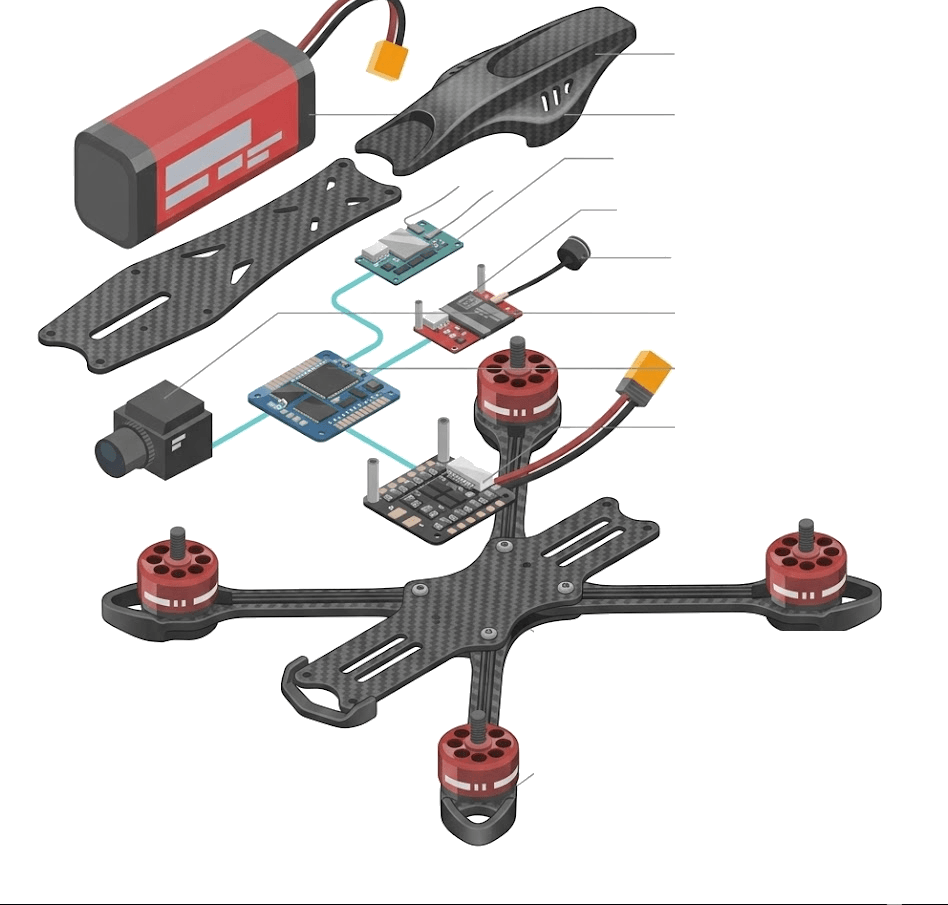
Of course you need a drone in Drone Racing! We won’t go through every single nut, bolt, and wire here—if you want to build one from scratch, there are incredible, deeply detailed guides out there.
But as a beginner, you might be looking at the vast FPV world and wondering: What exactly makes a racing drone different from all the other FPV quads out there?
Think of FPV drones like vehicles. They all have motors and propellers, but you wouldn’t take a heavy, armored tank to a Formula 1 track.
If you are getting into Drone Racing, you need to understand why a purpose-built racing quad is completely different from the drones you see doing tricks on YouTube or filming real estate commercials.
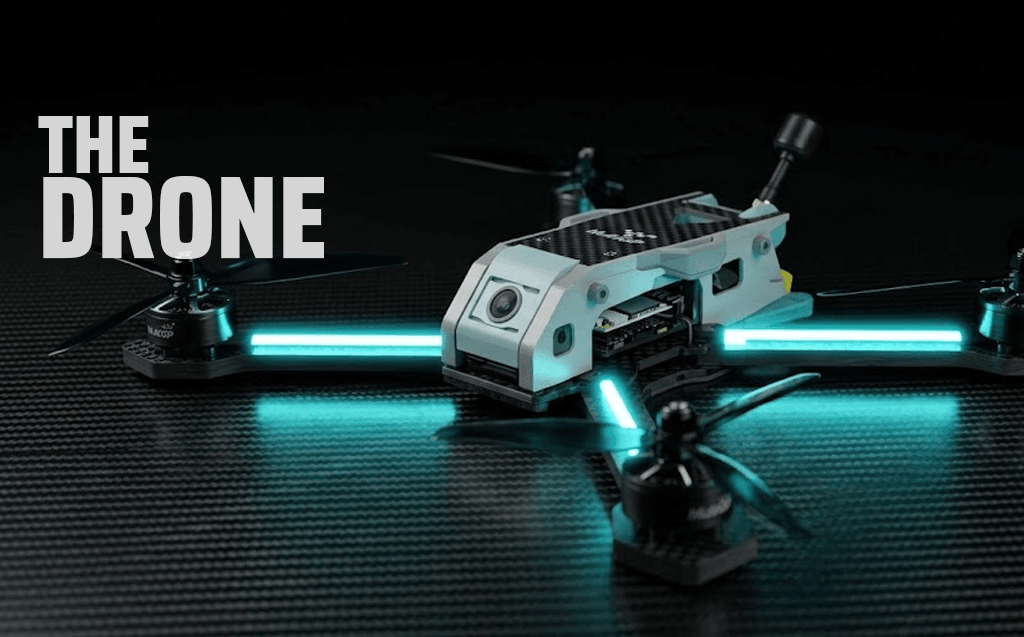
The Racing Drone (The Formula 1 Car): This is your track weapon. A racing drone is built with a single, obsessive focus: raw speed and instant cornering. Every single design choice is about shedding weight.
No HD Cameras: Racers almost never carry heavy action cameras (like GoPros). A GoPro adds weight, and weight is the enemy of acceleration. You only fly with the tiny, built-in FPV camera.
Hyper-Lightweight Frames: The carbon fiber frame is stripped down to the absolute minimum required to hold the motors and electronics together. It is highly aerodynamic, designed to slice through the air with minimal drag.
The Flight Feel: Because they are incredibly light with ridiculously powerful motors, racing drones have an insane thrust-to-weight ratio. They don’t drift; when you tell them to turn, they turn instantly, gripping the air like a race car gripping the asphalt.
Just like motorsports have different engine sizes or weight categories, drone racing is divided into specific “Classes” to keep the competition fair and organized.
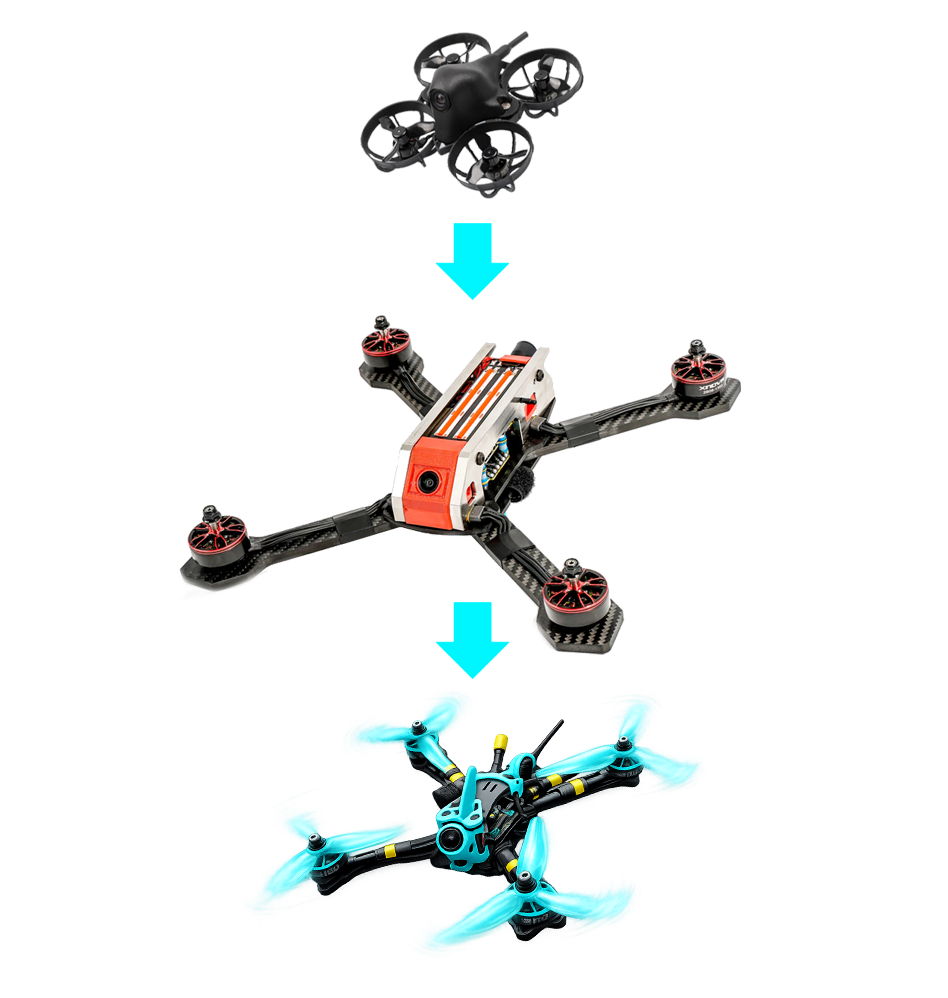
Whoop Class: The ultimate starting point. These are tiny, palm-sized drones with fully enclosed propellers (ducts). They are lightweight, extremely durable, and completely harmless. They are primarily raced indoors—often right through living rooms or local bars!
Micro Class: These bridge the gap between indoor toys and outdoor beasts, usually featuring 2-inch to 4-inch propellers. They are fast and agile but often weigh under 250 grams, making them less intimidating and perfect for racing in smaller outdoor spaces like local parks.
Open Class (The 5-Inch Standard): This is the premier, mainstream class of drone racing, universally based around drones with 5-inch propellers. “Open” means that as long as your drone meets the basic size and safety requirements, the rest is up to you. It’s a hardware arms race to build the fastest, lightest machine possible.
7-Inch Class: These are the big, loud beasts. Because they swing massive 7-inch propellers, they have immense top speeds and fly with a lot of momentum. Professional broadcast leagues often use larger drones like this because they are physically big enough for the audience and trackside cameras to actually see them moving at 100 mph.
Spec Class: Short for “Specification.” In this class, the hardware arms race is entirely eliminated. Every single pilot must fly the exact same drone model, with the exact same motors, props, and batteries. It removes the equipment advantage and comes down to 100% pure pilot skill. May the best thumbs win.


Where does drone racing actually happen? Just like Formula 1 or Motocross, pilots race on a designed circuit simply called the Track.
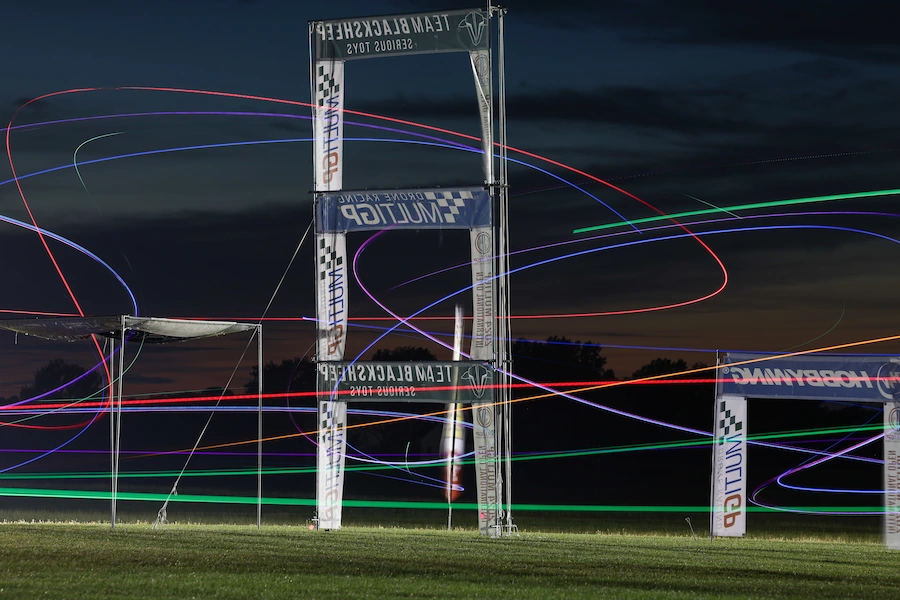
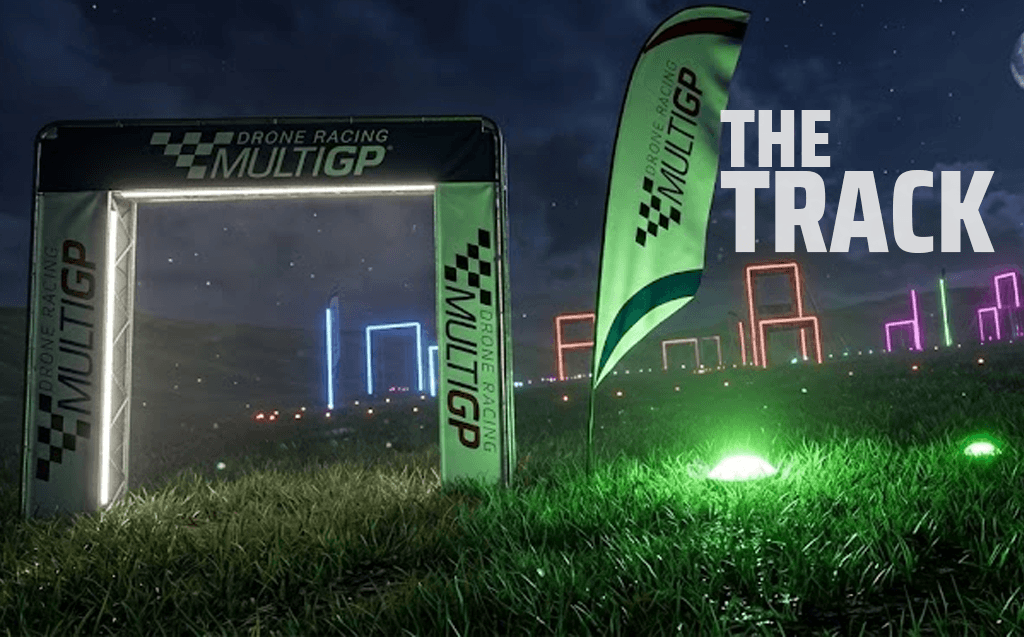
But instead of flat asphalt, an FPV track is a three-dimensional rollercoaster made of specialized obstacles. The format is exactly like other traditional motorsports: the race is based on laps. Each pilot must navigate their drone through the designated course, hitting every checkpoint in the correct order, to complete the laps faster than their rivals.
Because drones can move in any direction, track designers use the Z-axis (up and down) just as much as left and right.
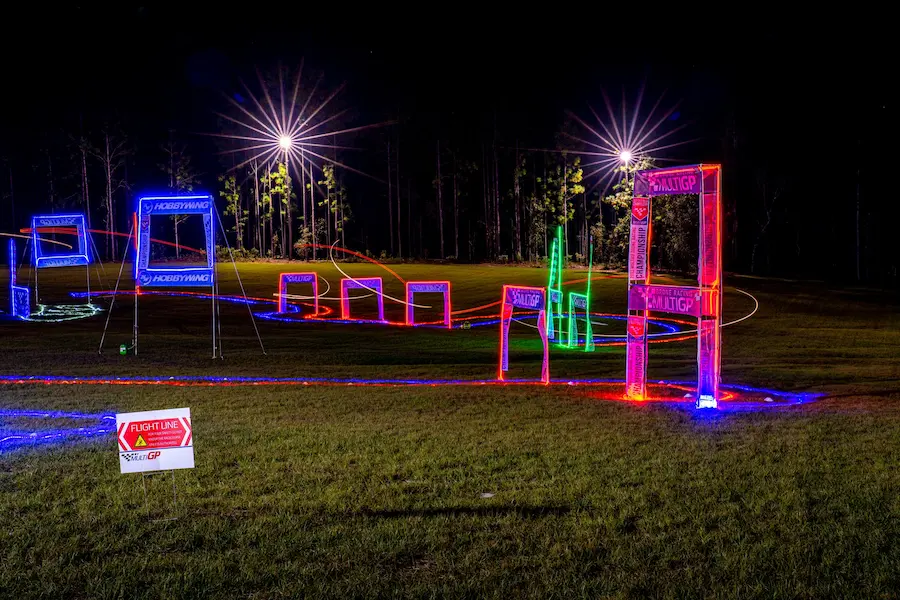
Navigating a track isn’t just about flying in straight lines from one gate to the next. Pilots must find the “racing line”—the smoothest, most efficient path through the obstacles. Beginners often try to fly too fast and jerk the drone around, but in drone racing, “smooth is fast.” Keeping your momentum flowing is the key to winning.
Tracks can be set up almost anywhere:
Outdoor Tracks: Massive open grassy fields where powerful 5-inch drones can hit their maximum top speeds.
Indoor Arenas: Tight, highly technical courses set up inside sports halls or warehouses, demanding absolute precision.
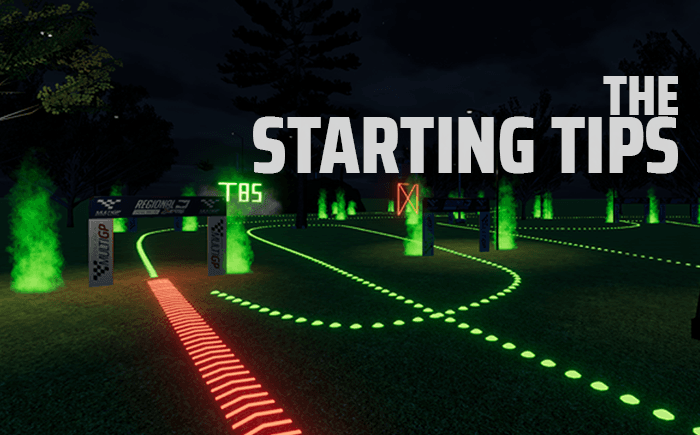
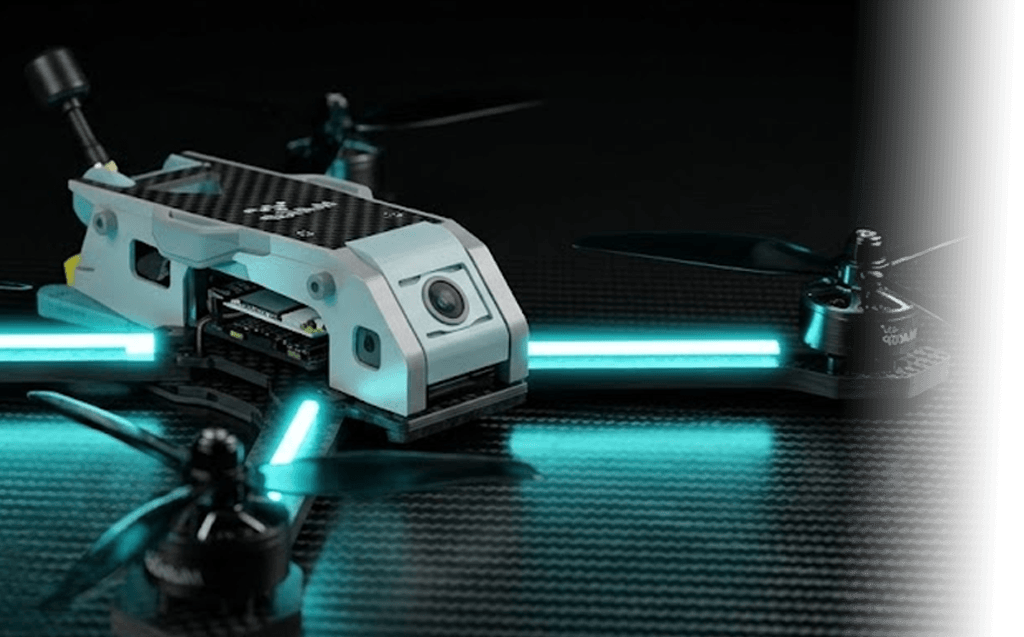
Night Tracks: Spectacular events where the entire track is illuminated with glowing neon LEDs. The glowing gates make it incredibly easy to see the layout through the FPV goggles while looking absolutely incredible for the spectators.
Since these racing drones are essentially flying blenders traveling at 100 mph, safety is paramount. Pilots never stand on the track. Instead, they sit side-by-side in a designated area called the Flight Line. This area is strictly protected by heavy-duty safety netting, allowing pilots to be completely immersed in their goggles while the physical drones race safely on the other side of the net.
Before you ever take a real drone to a real track, your first laps should be digital.
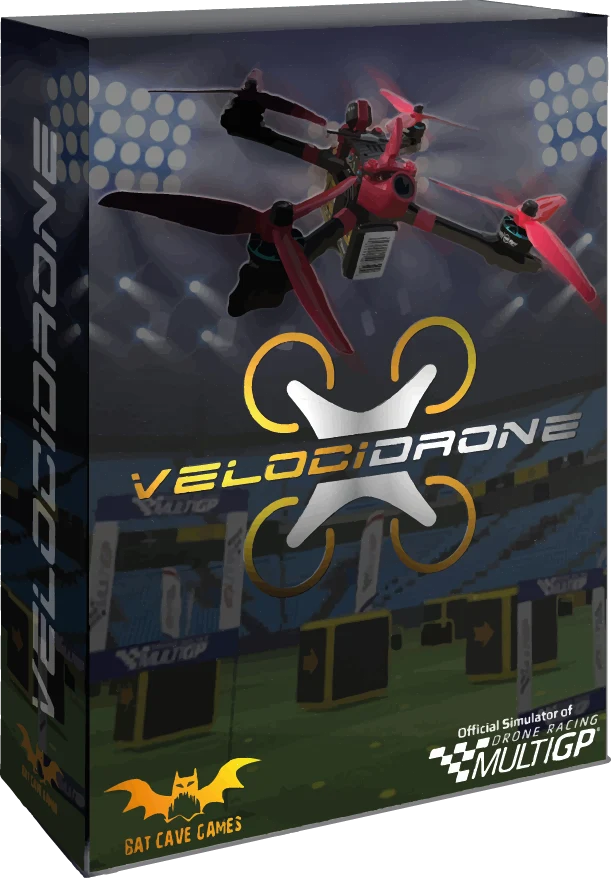
As the official simulator of MultiGP (the largest global drone racing league), VelociDrone isn’t just a video game; it is a dedicated, hyper-realistic training tool used by the fastest pilots on the planet.
Real Controls: You plug your actual Radio Transmitter directly into your computer via USB. The exact stick movements and rates you use in the simulator translate perfectly to your real-life drone.
Official MultiGP Tracks: Because of its official partnership, VelociDrone features exact digital replicas of real-world MultiGP championship tracks. You can practice the exact same gates, flags, and ladders that the pros race on before you ever set foot on the grass.
Save Your Gear: Spending your first 10 to 20 hours crashing in VelociDrone is the absolute best way to build your muscle memory without destroying hundreds of dollars worth of carbon fiber and electronics in your first five minutes!
Once you have put in your hours on VelociDrone and built up some muscle memory, it is time to buy real hardware. The biggest mistake beginners make is buying the fastest, most aggressive 5-inch racing drone immediately, only to smash it into a concrete wall on the first day. Instead, you need a graduated path:
Start Small with a Whoop: Your very first physical drone should be a Whoop class quad. Because they are tiny, lightweight, and have plastic guards around the propellers, they are nearly indestructible. You can crash them into your living room walls, bounce off furniture, and pick them right back up. A Whoop teaches you real-world throttle control and how to handle live video feed without the stress of flying a dangerous, heavy machine.
Graduate to a 7-Inch Pro Spec: When you are ready to move outdoors to a full-sized track, the natural instinct is to jump straight to the standard 5-inch Open Class. However, a fantastic (and highly recommended) alternative is stepping up to a 7-Inch Pro Spec drone first.
Smooth is Fast: Why a 7-inch? Because they swing larger propellers and carry more weight, 7-inch drones are slightly slower and less “twitchy” than 5-inch racers. They carry a lot of momentum. This forces you to focus entirely on your racing line and flow. You cannot rely on instant, aggressive acceleration to save you from a sloppy turn. You have to learn how to carry your momentum smoothly through the gates. In drone racing, learning to be smooth is the hardest part; the raw speed will naturally come later once you have mastered the lines.